Mercedes has exploited a hidden FIA safety regulation to unleash a last-moment power surge during qualifying, gaining crucial tenths of a second without penalty—an ingenious move that shocked the paddock and forced the FIA to intervene urgently and impose an immediate ban starting at the Miami Grand Prix.
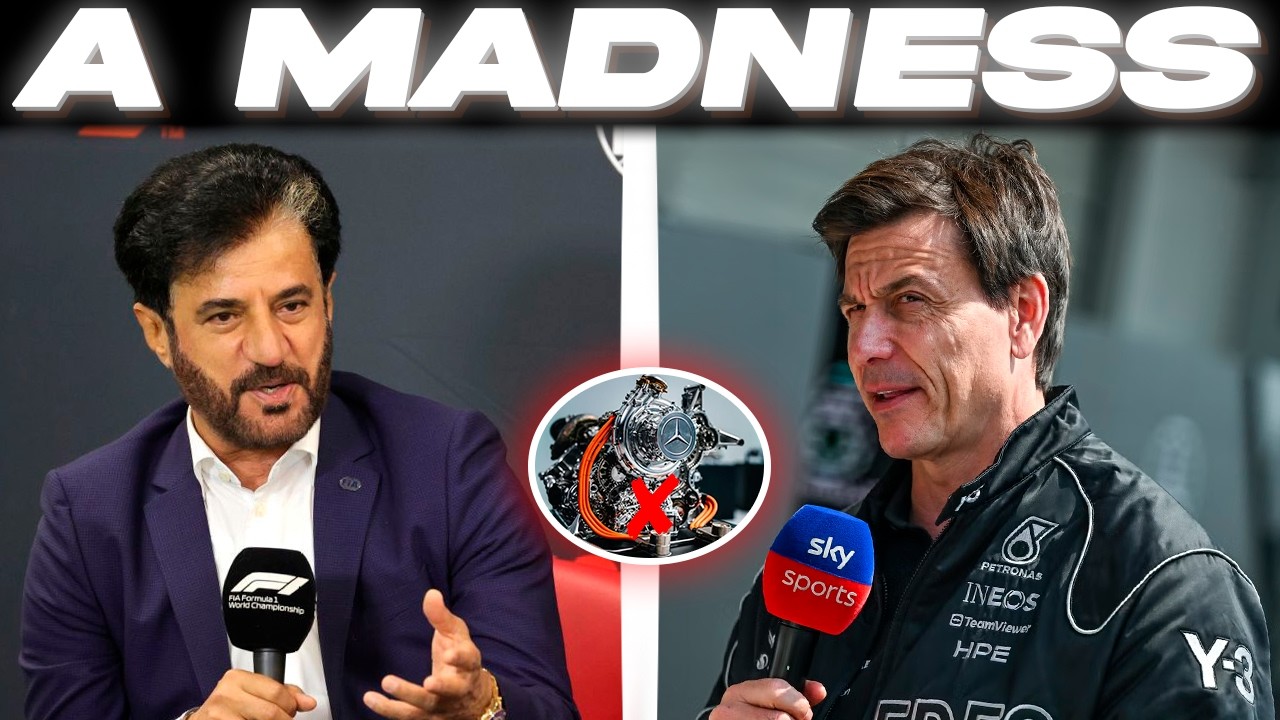 In a stunning revelation that reshapes our understanding of Formula 1 qualifying tactics, Mercedes engineered a controversial yet legal exploit rooted in a 2026 FIA safety rule designed to protect drivers—not to aid performance. This subtle manipulation created an invisible but decisive advantage, shaking the competitive balance to its core.
The background of this explosive story begins with the FIA’s safety regulation limiting power loss rate during electrical failures on straights to 50 kW per second, preventing dangerous sudden drops. Yet, an overlooked exception allowed the MGU-K to fully disconnect instantly in “technical emergency” scenarios, a clause initially meant purely for crash safety.
Mercedes, with surgical precision, reinterpreted this exception as a tactical weapon rather than just an emergency protocol. Waiting until the critical final meters of a flying lap, they triggered full energy release without any progressive restriction, delivering a supercharged “last blast” that rival teams could neither see nor counter.
This strategic stroke proved lethal. While others decelerated power gradually, Mercedes drivers hit the finish line with a sudden boost invisible to spectators but clear in lap time advantages. Red Bull reportedly adopted a similar tactic, intensifying the controversy across the grid.
Critically, the penalty attached to this move—the MGU-K’s 60-second shutdown—was rendered irrelevant, coinciding with cooldown laps when performance no longer mattered. This neutralized any downside and allowed Mercedes to repeatedly exploit the loophole without compromising subsequent performance.
Suspicion grew quickly as rival teams noticed patterns in telemetry data: unexplained bursts in the last sector of qualifying laps, inconsistent with typical fuel loads or engine modes. Ferrari, Honda, and Audi raised alarms, prompting the FIA to dig deeper into this newfound “performance loophole.”
FIA’s investigation confirmed a deliberate, repetitive use of the “emergency” disconnection for purely competitive gain rather than actual technical necessity. The governing body concluded the maneuver violated the spirit, if not the letter, of the regulations—in essence, weaponizing a safety feature into a tactical advantage.

In a swift and decisive move, the FIA banned the practice effective immediately from the Miami Grand Prix onwards. The ruling forces Mercedes and Red Bull to abandon their secret weapon and reconfigure their energy management for qualifying sessions, dramatically altering the competitive landscape.
The ban doesn’t just strip away tenths of seconds; it dismantles a carefully honed game-changer that determined pole positions and influenced race strategies. The ripple effect extends beyond mere lap times, impacting tire usage, clean air advantage, and pit stop tactics that hinge on qualifying results.
Behind this technical revelation lies a stark warning: Formula 1’s battles are no longer confined to the track but are fiercely fought in the nuanced interpretation of complex regulations. Mercedes did not cheat, but they exploited a finely balanced grey area with unmatched ingenuity.
The consequences underscore the FIA’s continual struggle to keep pace with innovation. Teams probe every rule for exploitable cracks before enforcement can catch up, creating a relentless arms race in legality and engineering. The sport’s regulatory framework is always one step behind cutting-edge ingenuity.
This incident signals a broader reality—if such a critical loophole was hidden in power unit management, other unseen exploits may lurk elsewhere on the grid, poised to be uncovered. The full scope of regulatory interpretations shaping Formula 1’s future remains uncertain and intensely competitive.
Mercedes’ clever manipulation of the MGU-K system reframed a safety mechanism into an instant power weapon, showcasing how rules intended to protect can instead redefine racing outcomes when read with extraordinary precision. It’s a masterclass in regulatory navigation that transcended typical technical progress.

FIA’s rapid prohibition affirms the delicate dividing line between legal innovation and fundamental fairness. Once a tactic decisively alters competition at the most crucial moment, immediate corrective action becomes imperative to preserve integrity—making this debacle a precedent for future regulatory rulings.
As qualifying reverts to traditional energy management strategies, teams must adapt quickly or face losing valuable milliseconds that can make or break entire race weekends. The final “boost” is gone, but the competition to find other legal edges will undoubtedly intensify further.
Ultimately, this saga exposes a chilling truth: Formula 1’s cutting edge is not solely in chassis or engine performance but in the uncanny ability to decode and exploit obscure regulation details before rivals. Where speed ends, legal wit begins—and victories are won in legal grey zones.
The FIA-Mercedes controversy puts the spotlight on how complex regulations can be weaponized, forcing tighter scrutiny and perhaps more robust regulatory design to prevent future exploitation. Formula 1’s technical warfare transcends circuitry and aerodynamics—it is fought in the fine print.
This is more than a story of a banned trick; it’s a wake-up call to the sport’s entire ecosystem. The real margin between victory and defeat now hinges on regulatory intelligence as much as mechanical prowess. Rights, rules, and racecraft are blurred in a fight for supremacy like never before.
As the grid recalibrates post-ban, all eyes remain on how teams will navigate this sudden regulatory shift and whether new loopholes will emerge equally potent. The Mercedes MGU-K episode was just one battle in an ongoing war over the interpretation and enforcement of Formula 1’s most intricate rules.

The Miami Grand Prix and beyond promise to reveal the true cost of this lost “last blast,” rewriting qualifying hierarchies and strategic playbooks. Formula 1 fans must brace for a season where legal expertise is as critical as driver skill and engineering genius.
In this fast-evolving saga, understanding the silent battles behind the scenes is essential. Mercedes’ trick was a masterstroke that forced the FIA’s hand, shining a harsh light on how safety standards can be transformed into competitive arms—and how the sport’s governance continually strives to catch up.
The question now haunting paddocks and boardrooms worldwide: what other hidden regulatory exploits are already shaping the grid’s fiercely contested margins? If Mercedes could find such a precise advantage in energy management, there may be many more unseen games quietly unfolding.
As the FIA clamps down on the MGU-K maneuver, the message is clear: innovation is limitless, but fairness demands swift correction. The future of Formula 1 depends on maintaining that fragile balance between pushing technological boundaries and preserving the sport’s equitable spirit.
This explosive episode may fade from headlines, but its implications will resonate throughout the championship. The pursuit of speed is now equally a pursuit of legal mastery—a relentless quest to read, interpret, and exploit the rules just enough to win without crossing the line.
In conclusion, this extraordinary 𝒔𝒄𝒂𝓃𝒅𝒂𝓁 redefines competitive strategy. It warns every competitor that in Formula 1, victory lies not only in who is fastest on track but who best deciphers the rulebook’s most cryptic clauses, turning safety features into instruments of triumph. The game has changed forever.
Source: YouTube