Ferrari’s secret weapon for the Miami Grand Prix has been 𝓵𝓮𝓪𝓴𝓮𝓭: a revolutionary new front wing for the SF-26, promising to solve the car’s critical aerodynamic weaknesses. This radical upgrade could redefine the battle at the front of the grid, marking either a game-changing comeback or a perilous gamble.
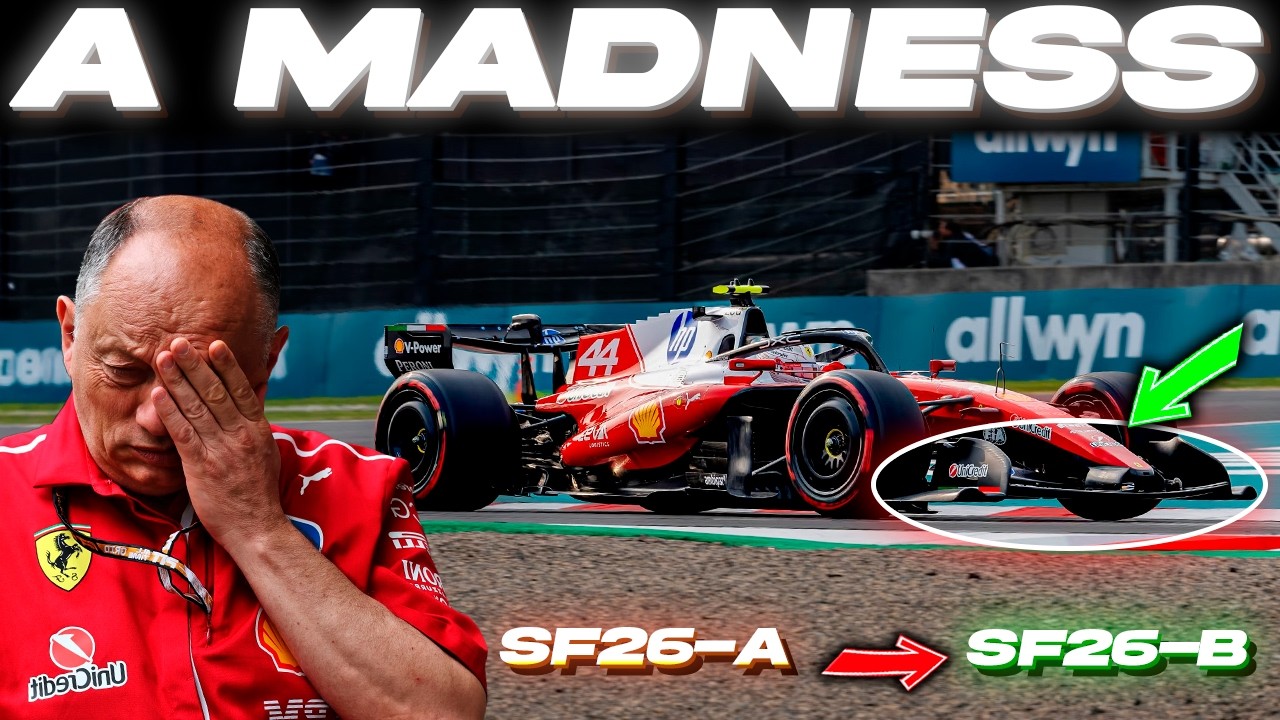 Inside the Ferrari paddock, the atmosphere is electric as whispers of the SF-26’s new front wing spread. This is no mere tweak—it’s a complete overhaul targeting the car’s Achilles’ heel. For months, Ferrari wrestled with a front wing that underperformed, hampering airflow management and stifling the entire aerodynamic package.
The front wing sits at the heart of an F1 car’s aerodynamics, shaping airflow from the first millimeter. Ferrari’s previous design was conservative and insufficiently sophisticated, generating turbulence that crippled downforce and increased drag. This flaw echoed through every corner, causing instability and poor straight-line speed.
During preseason, Ferrari tested over 50 front wing configurations, a frantic quest illustrating the depth of the problem. Each iteration failed to unlock the full potential, exposing the structural limitations of the SF-26’s aerodynamic foundation. This revealed a crisis disguised as incremental performance gaps.
Now, the Miami GP represents the culmination of weeks of intense development and layered modifications, all converging in this dramatic front wing. Supported by a reinforced aerodynamic philosophy, this wing is engineered not just to add downforce but to command airflow with surgical precision, transforming how the car breathes.
 The design aims to deliver pristine airflow around the nose, dramatically reducing turbulence and optimizing the feeding of critical surfaces like the flat bottom and side pods. This critical refinement promises to stabilize handling, cut drag, and enhance cornering consistency, reshaping the SF-26’s on-track character.
Ferrari’s gamble is monumental—this front wing must synchronize perfectly with the aggressive rear-end concepts already unveiled. The erstwhile disconnect between cutting-edge rear aerodynamics and a lackluster front element constrained the car’s potential. Aligning both ends could unleash unprecedented performance.
This overhaul is a strategic pivot—a one-shot masterstroke to erase months of underperformance. If successful, Ferrari’s SF-26 will transform into a more balanced, predictable beast capable of commanding diverse track layouts and weather conditions. Consistency and outright pace could surge, altering the championship’s competitive landscape.
However, altering such a fundamental aerodynamic element carries considerable risk. Shifts in airflow patterns affect balance, tire degradation, and cornering behavior. A mismatch could destabilize the car, making it unpredictable or even slower. The margin for error is razor-thin in an already tightly packed grid.

Every tiny adjustment made in previous rounds was a calculated probe, paving the way for this decisive update. This front wing is not a superficial upgrade; it is the culmination of painstaking analysis and iteration, representing Ferrari’s all-in bet for regaining its rightful place among Formula 1’s elite contenders.
Expectations are sky-high within Scuderia Ferrari, but so is the pressure. Miami will no longer be just another race; it will serve as the proving ground where Ferrari’s true competitiveness is measured. Whether this innovation sparks a renaissance or compounds difficulties remains the burning question.
Should Ferrari’s gamble pay off, the reverberations across Formula 1 will be seismic. Rival teams will scramble to respond, accelerating their development programs and perhaps rethinking their aerodynamic philosophies. A successful front wing could destabilize the status quo and reset championship trajectories.
 Conversely, failure carries steep consequences. An ineffective front wing could amplify existing aerodynamic flaws, worsening handling and performance. In such a fiercely contested field, even minor setbacks translate into lost positions and opportunities, risking a loss of momentum just as the season intensifies.
This moment embodies Ferrari’s season’s turning point, compressing months of engineering efforts into a single critical component. The outcome in Miami will dictate whether the SF-26’s development path is validated or if fundamental flaws remain irreparable despite enormous investment and ingenuity.
Spectators and teams alike anticipate gripping battles as the Miami GP unfolds, but beneath the surface lies Ferrari’s defining technical trial. This front wing is more than a car part—it is the fulcrum upon which Ferrari’s immediate future teeters. Its success or failure will echo for the rest of the year.
In sum, the 𝓵𝓮𝓪𝓴𝓮𝓭 details of Ferrari’s SF-26 front wing unveil a pivotal moment in Formula 1’s current season. The stakes could not be higher. Ferrari is betting everything on this radical aerodynamic leap. Miami will reveal if this bold new weapon restores the team’s fighting spirit or deepens its crisis.
Source: YouTube