Nico Rosberg has expressed shock at the blistering pace Lewis Hamilton and Charles Leclerc displayed during the Australian Grand Prix, signaling a seismic shift in Ferrari’s potential for the 2026 Formula 1 season. This unprecedented speed from both drivers could reshape the championship battle ahead dramatically.
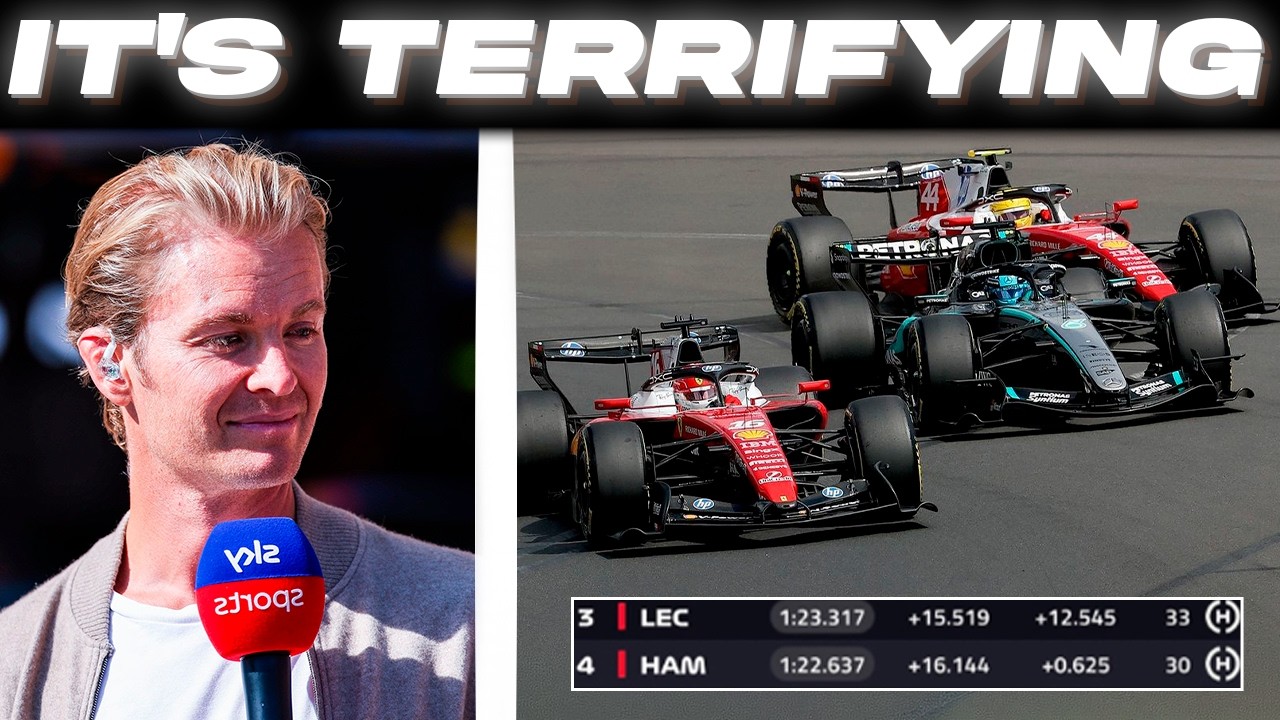 After the Australian GP, Rosberg, a former world champion familiar with Hamilton’s driving arc, revealed his astonishment at how quickly Hamilton adapted to Ferrari’s complex car. Unlike typical new-team struggles, Hamilton’s early rhythm neared that of Leclerc, suggesting Ferrari’s car is entering a new performance window.
Rosberg’s analysis extends beyond a single fast lap or race result. The critical insight lies in Hamilton’s transition from adaptation to full control. Once marked by micro steering corrections and cautious braking, Hamilton’s driving refined, anticipating the car’s behavior instead of reacting to it, a hallmark of a dominant driver-car synergy.
This transformation began quietly during preseason testing and early Bahrain sessions. Data showed Hamilton losing the twitchy adjustments that indicate uncertainty—a shift toward precision and predictive control. Experts view this as a major breakthrough, often foreshadowing exceptional race performance as Hamilton masters Ferrari’s unique aerodynamic and mechanical dynamics.
Meanwhile, Leclerc maintained his role as Ferrari’s outright speed leader, delivering blistering laps from the outset. Yet the growing parity with Hamilton indicates an evolving internal competition that could elevate the entire team’s development pace, pushing Ferrari’s performance envelope far higher than anticipated so early in the season.
 The Australian circuit, with its demanding high-speed corners and variable conditions, was the true proving ground. Both Hamilton and Leclerc exploited Ferrari’s stable rear end to press deeper into fast corners, showcasing their profound connection to the car’s grip and balance. This confidence at speed typifies drivers fully in sync with their machines.
Team principal Frederic Vasseur and Leclerc himself reportedly watched Hamilton’s fast progression with surprise during free practice sessions. Hamilton began mirroring crucial elements of Leclerc’s driving style, a strategic adaptation that has accelerated his comfort level and pace beyond usual timelines for a new team member.
Despite Ferrari’s struggles in race strategy—most notably a costly mistake involving virtual safety car tactics that derailed their podium chances—the raw pace and emerging harmony between Hamilton and Leclerc sent alarm bells throughout the paddock. Their combined speed could overwhelm rivals as the season rolls on.
Rosberg pointed out that Mercedes claimed about a half-second advantage on Ferrari during Australia, emphasizing the significance of Hamilton and Leclerc’s swift pace despite the car’s limitations. This suggests Ferrari’s 2026 package has substantial room to grow if both drivers continue to extract such high performance.

This dual-driver surge signals a potential renaissance for Ferrari’s championship hopes. Rosberg, who witnessed Hamilton’s gradual rise at Mercedes, warns that the real danger arrives when Hamilton fully masters his car. The Australian GP may have merely revealed the tip of a much larger threat lurking in Ferrari’s garage.
Within-team dynamics also appear unusually constructive. Far from internal strife, Hamilton and Leclerc’s complementary styles push each other forward. Hamilton integrates Leclerc’s proven techniques, while Leclerc leverages familiarity with the Ferrari platform. This synergy fosters continuous improvements instead of tension, a vital factor in sustained competitiveness.
The consequences for the Formula 1 grid are profound and immediate. If Ferrari’s drivers can jointly maximize performance this rapidly, the team’s development trajectory will accelerate, potentially dethroning established frontrunners as the season unfolds. This is a high-stakes evolution demanding attention from all rivals.
 Australia’s race demonstrated Ferrari’s current imperfections, yet also foreshadowed a climbing momentum. Strategic errors cost the team dearly, but glimpses of pace and composure reflected in Hamilton and Leclerc’s lap times now overshadow those setbacks, hinting at an increasingly formidable contender emerging on the horizon.
In summary, Nico Rosberg’s reaction underlines a shifting landscape in Formula 1. Hamilton’s rapid mastery of Ferrari’s challenging car, matched by Leclerc’s consistent speed, marks the start of a compelling narrative. Ferrari may well be poised to rewrite the hierarchy through sheer driver brilliance coupled with technical progress.
The rest of the 2026 season hinges on whether Ferrari can maintain this dual-driver peak and iron out remaining flaws. As Hamilton tightens his grip and Leclerc sustains his blistering pace, the Scuderia stands on the cusp of a revival that could unseat incumbents and reignite championship rivalries with breathtaking intensity.
With tensions rising, every upcoming race holds critical implications. Teams must now model their strategies around a Ferrari that’s quickening its adaptation curve while cultivating an internal competition that propels both Hamilton and Leclerc towards unprecedented heights. This is a narrative accelerating at Formula 1’s fastest speed.
In essence, Ferrari’s resurgence is not merely a return; it’s potentially a revolution sparked by Hamilton’s phenomenal arrival and Leclerc’s enduring pace. The Australian GP was the stage for this revelation, and every contender will now be watching closely, aware that the championship battle has entered a fierce new phase of unpredictability and fierce competition.
Source: YouTube