McLaren is closing in fast, unveiling its own advanced version of the blown exhaust system that Ferrari shocked the Formula 1 world with. This game-changing innovation, quietly developed and refined since Suzuka, threatens to disrupt the power balance on the grid ahead of the pivotal Miami Grand Prix. Tensions escalate as McLaren aims not just to copy but to surpass Ferrari’s advantage.
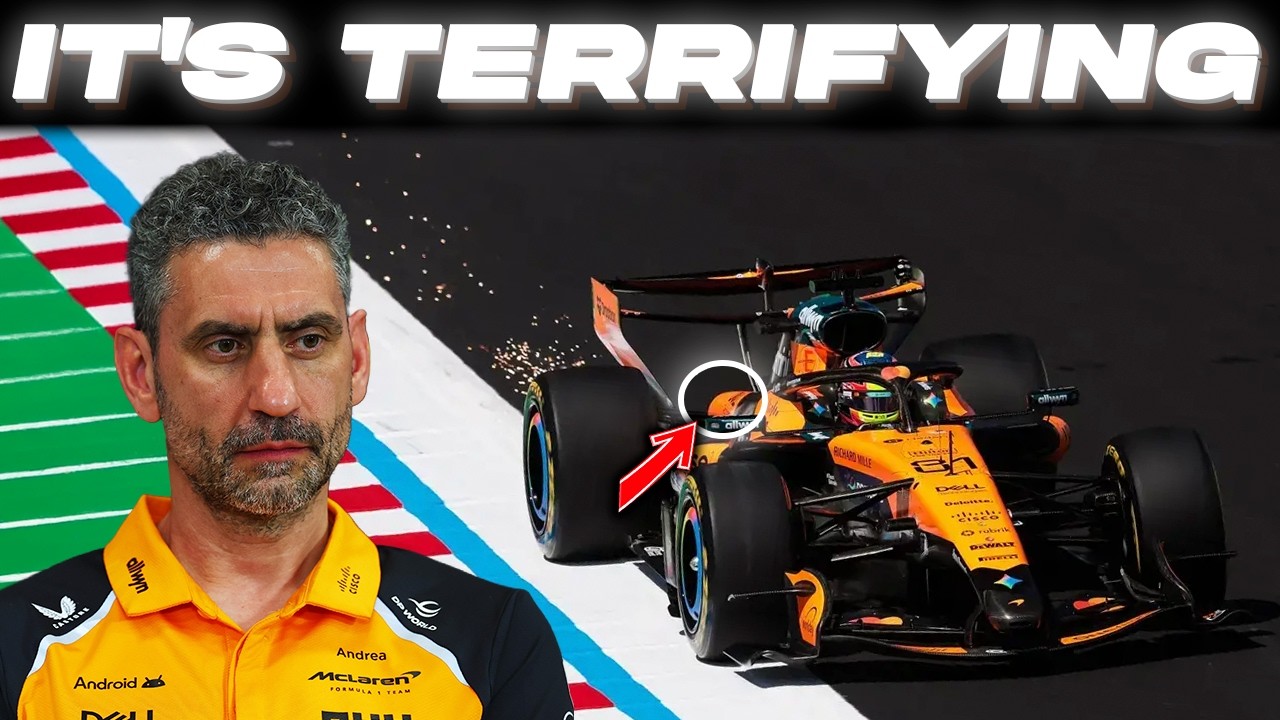 Ferrari’s introduction of the blown exhaust system sent shockwaves through the paddock, immediately carving out up to half a second per lap advantage—an eternity in F1 terms. McLaren, freshly established as a top contender through relentless 2024 upgrades, took the challenge head-on. Their response was swift and calculated, marking a crucial moment in this season’s championship war.
Behind closed doors at Suzuka, McLaren deployed precision sensors to dissect the exhaust’s hot gas flow and aerodynamic effects. This intensive data gathering was no mere observation but the foundation of a comprehensive redesign. Their strategy diverges sharply from direct imitation, seeking instead a tailored integration that fits their unique chassis and aerodynamic profile.
This approach isn’t just innovative; it redefines McLaren’s racing identity. Known for evolving smarter, not just faster, McLaren’s engineering team is leveraging every insight to forge a system that fits seamlessly into an already optimized car. Their recent surge after Miami 2024’s upgrades foreshadows the magnitude of this technical gamble.
Yet the stakes couldn’t be higher. The blown exhaust demands a radical reconfiguration of the rear car architecture. It affects diffuser airflow, downforce generation, and overall stability—factors that, if mismanaged, risk throwing a finely tuned car into chaos. McLaren’s engineers understand the razor-thin margin between revolutionary gain and catastrophic imbalance.

The looming test for McLaren will be at Miami, traditionally a battleground for major upgrades. Here, theoretical models and lab tests meet the unforgiving reality of race conditions: tire degradation, heat fluctuations, and dynamic traffic. Success could propel McLaren into contention not merely as challengers but potential dominators of the championship narrative.
Ferrari’s technical ecosystem surrounding the blown exhaust is a masterpiece of integration, balancing engine output with aerodynamic finesse to deliver a controllable, consistent gas flow during crucial race moments. McLaren’s challenge is monumental; the new system must harmonize with their current package without destabilizing the performance advances painstakingly achieved so far this season.
Internal McLaren sources reveal a deep commitment to preemptively resolving integration issues. Utilizing thermal sensors and flow analytics, they aim to circumvent common pitfalls other teams have faced. This reflects a development philosophy prioritizing precision and refinement over rushed replication—a principle that may determine their fate on the track.

Failure to nail the implementation risks severe repercussions. An unstable car turbocharged by a poorly integrated exhaust system threatens to undo McLaren’s season momentum and loosen their grip on title contention. The pressure is immense, as the team gambles on a high-risk, high-reward innovation mid-campaign that could redefine their competitive trajectory.
Within the paddock, observers remain divided—some cautious, others intrigued by McLaren’s audacity. This bold move signals a shift from reactive to aggressive strategy, placing McLaren at the forefront of technological evolution in F1. The Miami showdown will be the arena where this strategic gamble either pays off or backfires spectacularly.
The broader significance stretches beyond two teams. Should McLaren succeed, Ferrari’s initial advantage diminishes and the blown exhaust design becomes the new baseline for aerodynamic engineering across the grid. Innovation would transition into standard practice, forcing every competitor to elevate development intensity or risk obsolescence.

Conversely, a McLaren misstep would cement Ferrari’s dominance and potentially freeze the current technical hierarchy. Teams watching closely will calibrate their own strategies around the Miami results, determining whether to embrace similar paths or avoid the pitfalls unveiled by McLaren’s trial.
This escalating technical arms race underscores a dramatic evolution phase for Formula 1. The blown exhaust saga is no longer just a matter of engineering—it is a contest of execution, resilience, and adaptive genius. McLaren’s willingness to challenge Ferrari heralds a renewed era of fierce development battles defining the sport’s future.
As the countdown to Miami accelerates, the stakes soar. McLaren’s endeavor embodies the quintessential F1 narrative—pushing boundaries, risking everything, and rewriting the playbook on innovation. Every lap in Miami could sway the championship, spotlighting who truly masters not only new technology but the ruthless art of its application.
In conclusion, McLaren’s quietly revolutionary blown exhaust is poised to rewrite Formula 1’s technical hierarchy. The team’s unique reinterpretation of Ferrari’s disruptive innovation promises to either restart the season’s development arms race or falter with costly consequences. The world now watches intently as history edges closer to the checkered flag.
https://www.youtube.com/embed/sS2FQF4Zkh0