The long-hidden and bitter feud between Carol O’Connor and Rob Reiner on the set of All in the Family has finally been laid bare. New revelations expose decades of personal animosity, clashing egos, and irreconcilable artistic differences behind television’s most iconic cultural battle. The truth shocks and redefines their legendary collaboration.
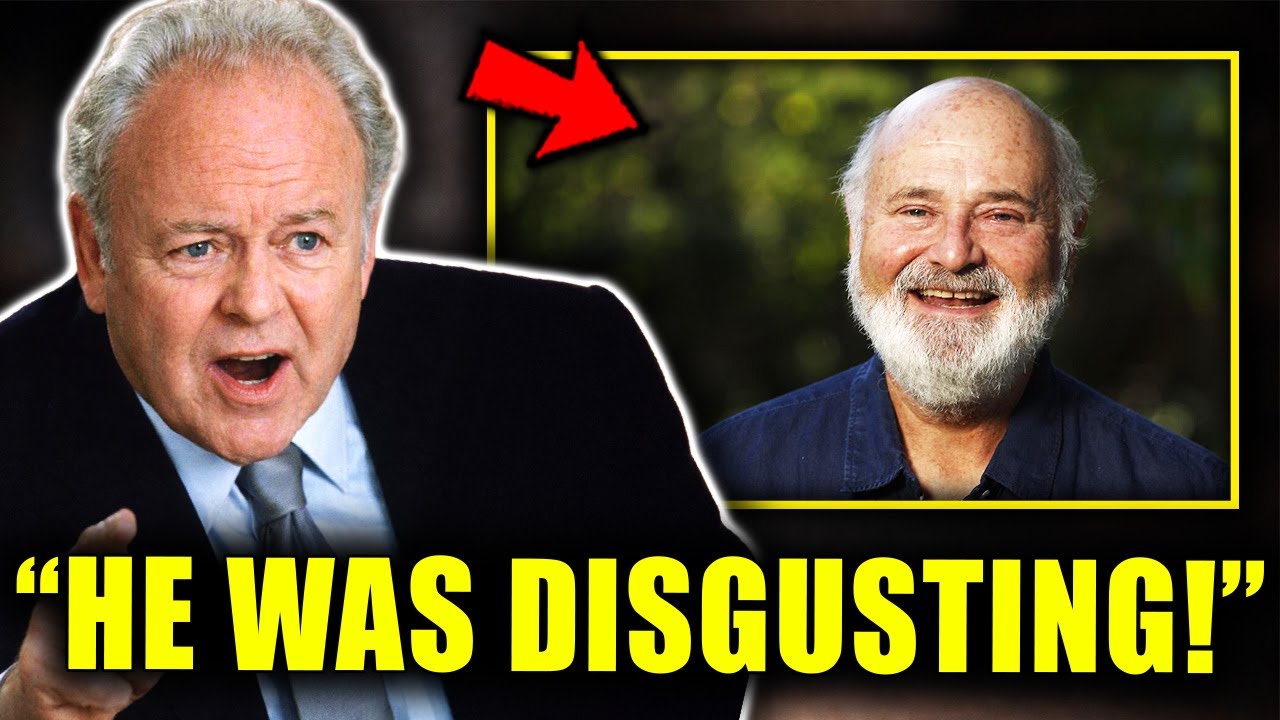 For years, viewers saw the electric on-screen tension between Archie Bunker and Michael Stivic as groundbreaking television 𝒹𝓇𝒶𝓂𝒶. Yet behind the cameras, Carol O’Connor and Rob Reiner nurtured a deep-seated resentment that poisoned their working relationship from day one.
Before filming even began, cracks appeared. O’Connor, a seasoned actor with decades of experience, prioritized subtlety and nuance, while Reiner brought youthful idealism, openly challenging performances to push a clear political message. What was meant to be creative tension spiraled into uncompromising conflict.
Reiner’s insistence on portraying Archie Bunker as unequivocally wrong clashed with O’Connor’s vision of a complex, realistic character. Their early rehearsals stalled repeatedly, with heated arguments disrupting the cast. O’Connor felt Reiner encroached on his craft, transforming nuanced acting into a moral crusade.
 The tension soon became palpable to everyone on set. O’Connor would freeze rehearsals, fix Reiner with icy stares, and refuse to continue until order was restored. Reiner’s repeated interruptions and ideological pressure tested O’Connor’s patience and shattered any sense of teamwork.
Their off-screen friction mirrored the explosive on-screen debates but carried a bitterness that the public never suspected. Norman Lear, the show’s creator, admitted the conflict intensified as the series progressed, at times hindering production and fracturing the cast’s cohesion.
Gene Stapleton, who played Edith Bunker, described the atmosphere as thick with controlled tension. She observed O’Connor visibly recoil whenever Reiner challenged his readings. The hostility fueled charged exchanges but left a lingering coldness beneath every scene, unnoticed by the audience.

As All in the Family smashed ratings and earned accolades, the rift between its stars only deepened. Critics hailed Reiner’s character as the “voice of reason,” fueling cultural debates and leaving O’Connor feeling his character’s humanity was being stripped away in a relentless ideological battle.
O’Connor’s resentment culminated in blunt public remarks branding Reiner as arrogant and disrespectful to the art of acting. He felt Reiner weaponized performance to preach rather than portray, a violation he refused to forgive. Their feud, distinct from politics, was grounded in personal betrayal.
 Even after the series ended in 1979, their animosity remained frozen. While O’Connor embraced dramatic roles that redefined his career, and Reiner flourished as a director, neither sought reconciliation. The silent divide lingered as a testament to unresolved conflicts underpinning their shared success.
Rob Reiner’s choice to stay silent on the feud added layers of complexity. His refusal to publicly counter O’Connor’s sharp criticisms allowed the narrative to stand as a stark reminder of unhealed wounds, refraining from turning private discord into public spectacle.
O’Connor’s death in 2001 revived reflection on their tumultuous relationship. Hollywood remembered his discipline and influence, while Reiner offered measured respect but no reconciliation. The silence between them became the final, haunting note of a feud that defied resolution.
This story exposes the raw, often hidden cost of landmark television. The deeply personal clashes fueling All in the Family’s explosive success also carried scars that never healed, illustrating a hard reality: not all conflicts end with forgiveness—some echo long after the spotlight fades.
Source: YouTube