Cedric Allen Ricks was executed by lethal injection in Huntsville, Texas, tonight at 6:55 p.m., ending a 12-year legal battle. Convicted of murdering his girlfriend Roxan Sanchez and her young son Anthony, Ricks’ death marks a grim conclusion to one of Texas’s most harrowing capital punishment cases in recent years.
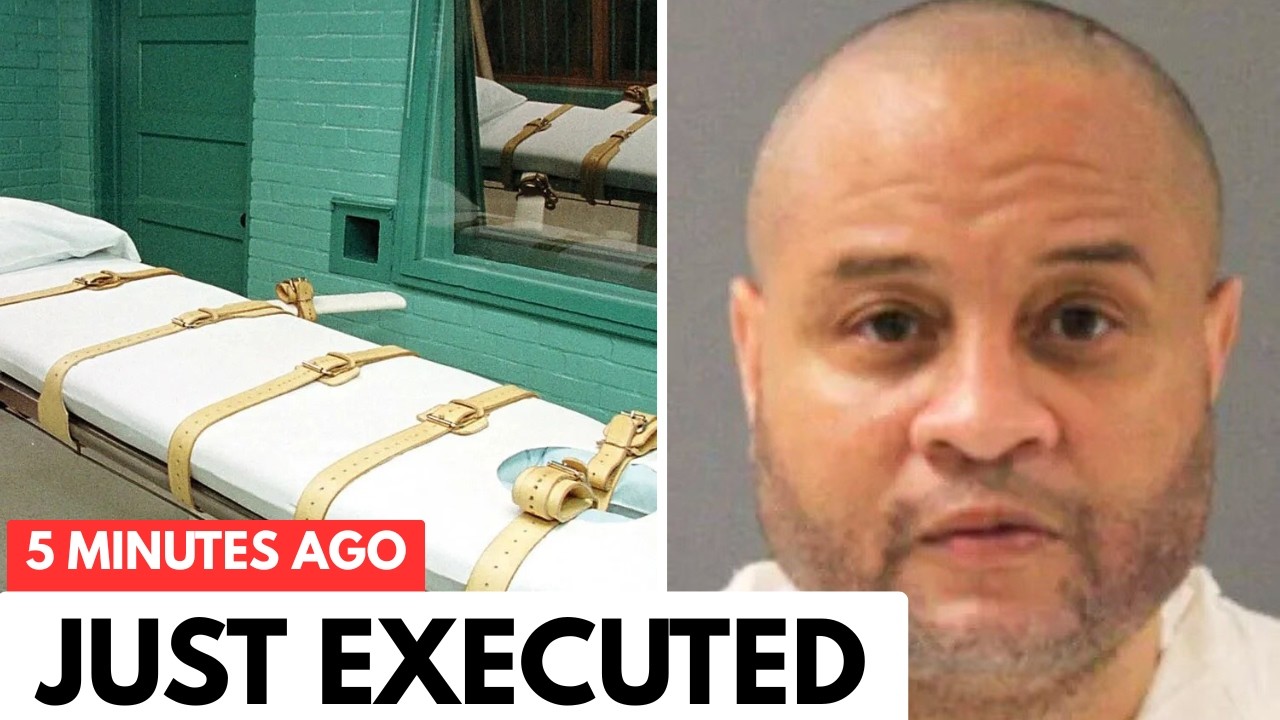 The crime that placed Cedric Allen Ricks on death row shocked the quiet suburb of Bedford, Texas. On May 1, 2013, following a violent domestic dispute, Ricks fatally attacked Roxan Sanchez and her eight-year-old son Anthony. The brutal 𝒶𝓈𝓈𝒶𝓊𝓁𝓉 also gravely wounded twelve-year-old Marcus Figueroa, who miraculously survived by feigning death.
Marcus’s harrowing survival became a crucial element in the prosecution’s case. Severely injured with 25 stab wounds, Marcus played dead until Ricks fled the scene. This intense moment of instinct and courage resonated deeply throughout the ensuing trial and legal proceedings, anchoring the emotional weight of the case.
The attack unfolded in a seemingly peaceful neighborhood at the 1400 block of Parkplace Avenue. Bedford, usually known for its family-oriented atmosphere, was shaken by the horrific violence that contravened its quiet reputation and left an indelible scar on the community.
Ricks’s relationship with Roxan Sanchez was fraught with signs of domestic violence long before the fatal night. A court appearance the day before the attack cited 𝒶𝓈𝓈𝒶𝓊𝓁𝓉 charges against Ricks, highlighting an escalating pattern of 𝓪𝓫𝓾𝓼𝓮 that culminated in tragedy less than 24 hours later.
Following the horrific murders, Ricks fled the state, taking Roxan’s car and calling family members en route to his arrest in Garvin County, Oklahoma. His flight across state lines set off a multi-jurisdictional manhunt that quickly ended with his capture and return to Texas for trial.
The trial, held in Tarrant County, was a tightly contested legal battle lasting about two weeks. Testimonies ranged from forensic evidence to Marcus’s chilling eyewitness account, which painted an unflinching picture of the violence and established Ricks’s guilt beyond reasonable doubt within an hour’s jury deliberation.
 Throughout the trial, Ricks claimed self-defense and acknowledged his anger issues but offered no substantial explanation for the brutal killings. His testimony was met with skepticism, especially given the overwhelming evidence and the powerful firsthand account from young Marcus Figueroa.
Sentenced to death on May 16, 2014, Ricks spent more than a decade on Texas’s notorious death row. During this time, he underwent several appeals, all of which ultimately failed to overturn the conviction or delay the execution. His prolonged legal battle exemplified the rigorous appeals process typical of capital cases.
Ricks’s appeals challenged aspects such as ineffective counsel, suppression of evidence, racial bias in jury selection, and visible shackling during trial. Each argument brought before various courts, including the U.S. Supreme Court, was systematically denied, closing legal avenues up until the final hours before execution.
On the very day of his execution, an emergency appeal was filed in the U.S. Supreme Court. However, this last-ditch effort was swiftly rejected without explanation, clearing the way for Texas officials to proceed with carrying out the death sentence as scheduled.
Texas’s Huntsville Unit, the site of Ricks’s execution, remains the epicenter for capital punishment in the state. The procedure involved administering a lethal dose of pentobarbital at 6:55 p.m., a protocol designed to ensure a swift and controlled death, witnessed by representatives of both victim and defendant families.
Unique to Texas, the tradition of granting death row inmates a last meal was abolished years before Ricks’s execution. Consequently, Ricks accepted the standard prison meal, a somber detail underscoring the stark realities of the state’s current execution practices and the finality of his punishment.

Before his death, Cedric Allen Ricks delivered a brief, remorseful final statement. He expressed sorrow to the families of Roxan and Anthony, and directly addressed Marcus, conveying regret for the pain he caused and wishing them peace, a fleeting moment of humanity amid the grim proceedings.
The case of Cedric Allen Ricks leaves behind a haunting legacy. It exposes the brutal consequences of domestic violence and the lasting trauma endured by survivors like Marcus Figueroa, who was forced to confront unimaginable horror at a tender age and relive it in a courtroom.
For the families torn apart by this tragedy, justice took the form of Ricks’s execution, but the emotional scars remain deeply embedded. Communities affected by such violence grapple with healing even as the legal system closes the chapter on the perpetrator’s life.
Tonight’s execution concludes a saga marked by intense emotional testimony, legal scrutiny, and profound community impact. As Cedric Allen Ricks’s life ended in the death chamber, this brutal story of violence and survival leaves a lingering echo of pain and resilience.
The final moments encapsulate both devastating loss and the agonizing endurance of those who survive. Marcus Figueroa’s remarkable act of survival and subsequent testimony ensured that justice was served, but the human cost of the tragedy echoes far beyond the courtroom walls.
 Texas continues to enforce capital punishment with tenacity, reflecting the state’s firm stance on violent crime and retribution. Cedric Allen Ricks’s case stands as a stark reminder of both the severity of the justice system and the complex, painful narratives behind death penalty cases.
As the state moves forward, the emotional resonance of this case underscores the urgent need for awareness about domestic violence and the consequences it can unleash on families and communities, emphasizing prevention alongside punishment.
This execution marks the second carried out in Texas in 2026, maintaining the state’s position as a leading executor in the nation. The swift administration of justice here reasserts Texas’s role at the forefront of capital punishment enforcement in the United States.
Cedric Allen Ricks’s twelve years on death row now come to a close, but for survivors and families, his death is just one part of an ongoing journey toward healing and closure in the face of profound tragedy and loss.
This tragic case embodies the harsh realities of life on death row and the toll it takes on everyone involved—from victims and their families to survivors forced to live with trauma and the perpetrator who faced the ultimate punishment.
As news of the execution spreads, it serves as a sobering reflection on justice, mercy, and the heavy burdens borne by those left behind. Cedric Allen Ricks is gone, but the reverberations of his crimes and his death will haunt many for years to come.
https://www.youtube.com/embed/9epfwG8A_bc