In a chilling conclusion to decades of terror, Florida executed serial killer Glen Edward Rogers on May 15, 2025, at 6:16 p.m. His haunting final words shockingly included a message to President Trump and a cryptic promise of unresolved answers, leaving families and the nation grappling with haunting questions.
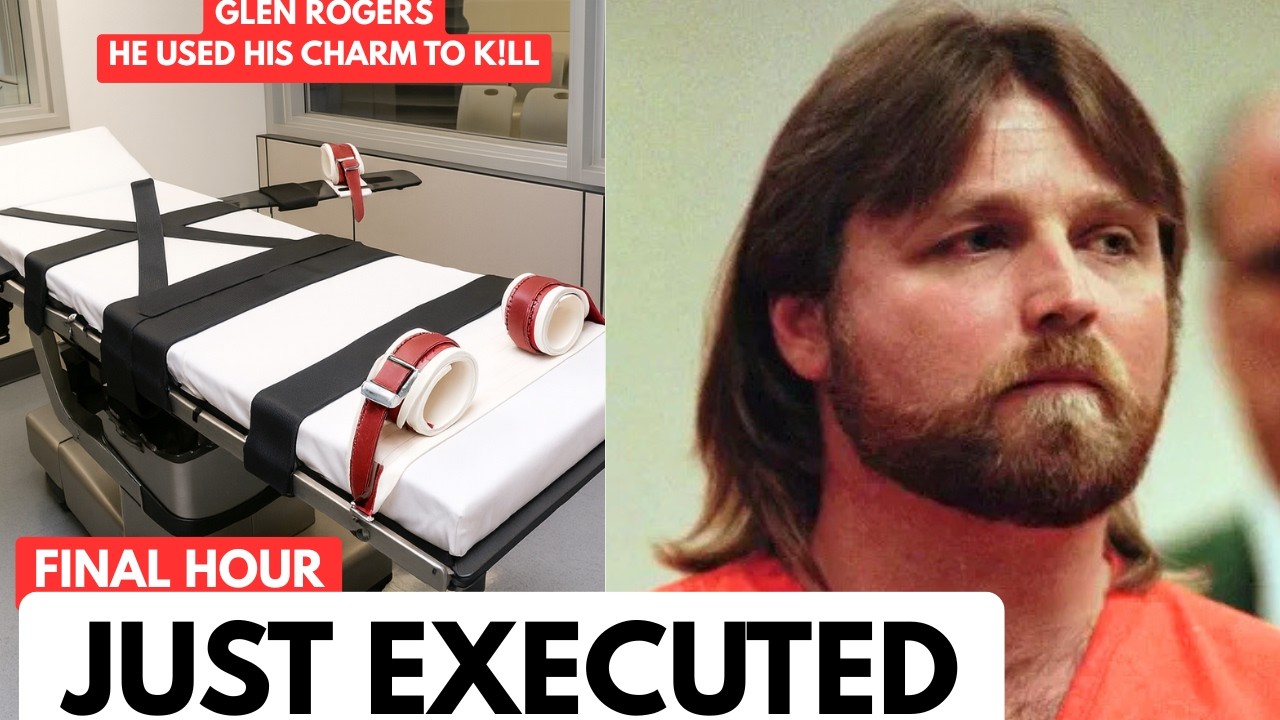 Glen Edward Rogers, notorious across multiple states, was put to death by lethal injection at Florida State Prison near Starke after nearly 30 years on death row. At 62, Rogers ended a violent saga that spanned a brutal killing spree in 1995, leaving at least four women dead and countless others shattered.
His execution came after a drawn-out legal battle filled with appeals, new 𝓪𝓫𝓾𝓼𝓮 claims, and controversial confessions that stirred media frenzy and public debate. Rogers’ case remained a dark highlight in American criminal history, marked by violence, mystery, and chilling manipulation.
Born in Ohio in 1962, Rogers’ troubled upbringing under a cruel mother cracked the surface of a life destined for devastation. Childhood trauma, including near-drowning and 𝓪𝓫𝓾𝓼𝓮, shaped a man who struggled with ADHD, volatility, and eventually violent impulses that erupted in adolescence and adulthood.
By his teenage years, Rogers was already embroiled in turmoil. Married by 14, his early pattern of domestic 𝓪𝓫𝓾𝓼𝓮 foreshadowed a violent future. His adult life was marked by arrests for theft, pimping, 𝒶𝓈𝓈𝒶𝓊𝓁𝓉, and disturbing suicide attempts, revealing a man using charm as a veneer for darker impulses.
Despite a magnetic personality, Rogers’ charm deteriorated under the influence of alcohol, exposing a more sinister side. 𝒶𝓁𝓁𝑒𝑔𝒶𝓉𝒾𝓸𝓃𝓈 of bizarre behavior like injecting beer intravenously underscored the depth of his instability and the frightening duality he embodied.
Rogers’ killing spree in the fall of 1995 drew nationwide attention. Over six weeks, he murdered at least four women across four states—California, Mississippi, Florida, and Louisiana—targeting vulnerable single mothers, many with reddish hair, in a horrific pattern blending calculation and brutality.
The first known victim, Sandra Gallagher, was strangled and burned in her truck in California after meeting Rogers at a bar. Her death marked the start of a terrifying, cross-country trail of violence that would leave families devastated and communities on edge.

Next, Linda Price disappeared from Mississippi after briefly sharing an apartment with Rogers. Found stabbed to death in her bathtub, Price left behind two teenage children who lost their mother in an unthinkable act of violence by a man she briefly trusted.
In Florida, Rogers’ charm lulled Tina Marie Cribbs into a deadly trap. She was seen leaving a bar with him, only to be found stabbed to death in a motel bathtub days later. Rogers stole her car and fled north, eluding capture amid escalating fear and outrage.
The final confirmed victim, Andy Giles Sutton in Louisiana, was slashed to death in her apartment. Rogers was already on the run, driving stolen vehicles and staying one step ahead of law enforcement until his dramatic capture in Kentucky in 1995.
Rogers’ arrest came after a high-speed chase culminating in a roadblock and a police ram. Officers surrounded him, watching the man responsible for a cross-country trail of bodies finally fall. During the pursuit, his reckless defiance was evident as he hurled a beer can at police cruisers.
Following his arrest, Rogers infamously claimed responsibility for nearly 70 murders, a boast he later retracted as a joke. The truth of his tally remains murky, but his conviction in two states confirmed a life steeped in violence and evasion of justice.
His trials spanned states. In Florida, Rogers was convicted of first-degree murder for Tina Marie Crebs’ death in 1997 and sentenced to death. Two years later, California sentenced him again for Sandra Gallagher’s murder. Appeals failed, sealing his fate amid mounting evidence.

Despite decades behind bars, Rogers maintained a cloud of controversy, most notably linked to the infamous Nicole Brown Simpson and Ron Goldman case. His brother claimed Rogers confessed involvement, but LAPD and prosecutors rejected any connection, leaving the story a dark side note in his legacy.
The 2012 documentary “My Brother, the Serial Killer” fueled speculation by airing Rogers’ alleged confessions and paintings hinting at the Simpson murders. Yet, official responses remained firm, discrediting these claims and underscoring the conviction of the original suspect, O.J. Simpson.
In final years, Rogers claimed repressed memories of childhood 𝒔𝒆𝒙𝒖𝒂𝒍 𝓪𝓫𝓾𝓼𝓮 and alleged 𝓪𝓫𝓾𝓼𝓮 in juvenile detention. Courts dismissed these claims, and death warrants were signed. His appeals up to the U.S. Supreme Court repeatedly failed, culminating in the inevitable execution date.
On May 15, 2025, Rogers spent final hours with brief contact from his wife and his brother, Claude, who expressed love and sorrow. The execution chamber’s witnesses watched as he calmly faced death, requesting only pizza, chocolate cake, and soda as his last meal.
At 6:16 p.m., Rogers was pronounced dead via Florida’s three-𝒹𝓇𝓊𝑔 lethal injection protocol. His composed demeanor contrasted starkly with the brutal chaos his life had wrought. Thirty witnesses absorbed the final moments of a man who had haunted families for decades.
Before the drugs silenced him forever, Rogers delivered a staggering final statement. Addressing victims’ families and the public, he promised future revelations but offered no specifics. Shockingly, he directly urged President Trump, “keep making America great,” adding an eerie political note to his farewell.

Victims’ families reacted with a mix of relief, anger, and skepticism. While some, like Jerry Valacella and Debbie Sparks, found closure after long years of pain, voices like Randy Roberson decried the peacefulness of the execution, feeling it belied the horror Rogers inflicted.
Tina Crebs’ mother voiced enduring faith in divine justice, echoing decades of hope that God would ultimately prevail. That faith was tested over nearly 30 years of waiting, destroyed lives, and endless appeals, ending finally when Rogers met his fate within Florida’s prison walls.
Glen Edward Rogers’ life is a dark emblem of violence, dysfunction, and unapologetic cruelty. He exploited charm and manipulation to mask a capacity for unfathomable brutality, leaving behind shattered families and lingering questions about victims yet unaccounted for.
His execution closed a grim chapter but opened others—questions about his true extent of guilt, the accuracy of his confessions, and whether any answers remain buried with him. The promise he made at death’s door fuels unease and intrigue around the legacy he leaves behind.
What remains undeniable is the impact Rogers had on multiple communities and countless lives. The trail of destruction and despair he forged will not be forgotten, nor will the families who endured decades seeking justice, and finally, a measure of peace.
Now, as Florida carries out the state’s fifth execution in 2025, the nation is reminded of the potent, distressing realities of capital punishment and the profound stories behind those it touches. Rogers’ death marks an end—and a haunting restatement of unresolved pain.
We close this chapter in criminal history with a sober reflection on a man who spent his life weaving manipulation, murder, and mystery. Glen Edward Rogers is gone, but the echoes of his violence and cryptic final words linger beyond the execution chamber’s walls.
https://www.youtube.com/embed/70SHPW31m30