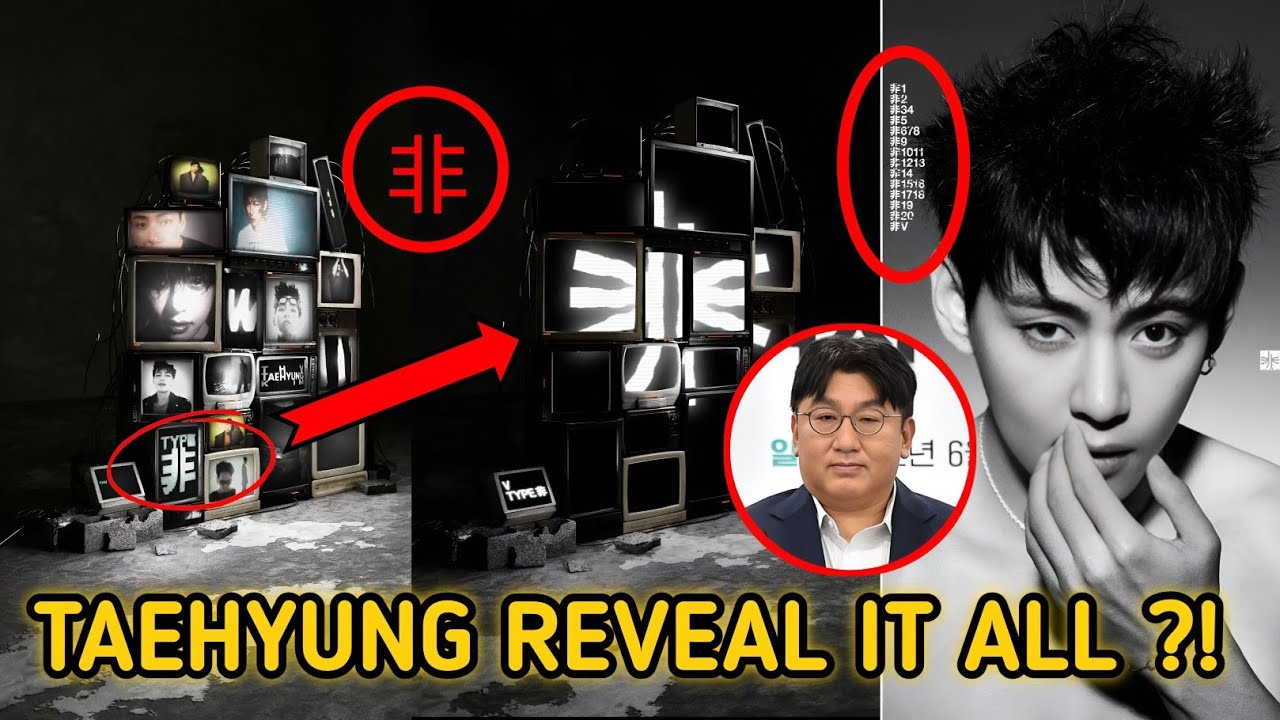
A mysterious new concept from BTS member V, known as Taehyung, has fans buzzing with curiosity. The phrase “TYPE 非” has emerged, leaving many to ponder its deeper meaning and implications, suggesting that this is more than just another artistic endeavor—it’s a bold statement from the artist himself.
When Taehyung first introduced this intriguing concept, he did so without fanfare or extensive explanation. Instead, he opted for a minimalist approach that evokes a sense of calm yet powerful introspection. The character 非, which translates to “not” or “against” in various East Asian contexts, hints at a rejection of labels and expectations. It feels as though Taehyung is daring his audience to resist defining him or his work.
Visually, the concept is striking—cold, simple, and somewhat unsettling. It features stark screens and scattered light, creating an atmosphere that feels both observed and isolating. This is not the typical presentation associated with pop music or celebrity branding; it resembles more of an art installation designed to provoke thought rather than provide comfort.
What makes “TYPE 非” particularly compelling is how it aligns with Taehyung’s artistic journey. Throughout his career, he has consistently defied conventional paths, embracing choices that prioritize mood, identity, and intention over trends. This latest project seems to amplify that ethos, presenting a sharper, more assertive stance.

There’s also a poetic resonance in the visual similarity between the phrase “no type” and the letter V when broken down into lines. Whether intentional or not, this connection blurs the lines between Taehyung’s name, his identity, and the very essence of the concept itself. It’s not about persona or role; it’s simply about presence.
Fans are left wondering: Is this a musical project? A visual art piece? A collaboration with HYBE? The ambiguity appears to be intentional, shifting the dynamic of power between the artist and the audience. Instead of passively consuming information, fans are invited to interpret, reflect, and feel. In a fast-paced world, “TYPE 非” introduces a moment of stillness.
There’s an emotional weight to this concept. The darkness portrayed isn’t aggressive, but it certainly isn’t comforting either. It evokes a sense of contemplation and solitude, as if Taehyung is navigating a space between public persona and private self. This isn’t a rebellion for shock value; it’s a quiet challenge to oversimplification.
If this is indeed a new project, it seems designed for those willing to embrace uncertainty, recognizing that not everything meaningful requires explanation. “TYPE 非” doesn’t seek approval; it exists on its own terms, which may be its most powerful message.

There’s an underlying tension in the concept, a push and pull between visibility and obscurity. The fragmented visuals and shadows suggest that Taehyung is presenting pieces of himself rather than a complete picture, inviting audiences to confront the discomfort of not knowing everything at once.
This approach feels intensely personal. For someone who has lived under constant scrutiny, choosing a concept rooted in rejection is a bold move. It’s not merely about creating distance; it’s about establishing boundaries.
Time plays a crucial role here as well. With retro televisions and analog silence in a digital world, the work cleverly evokes themes of memory, repetition, and our media consumption cycles. It transcends Taehyung as an artist, prompting reflections on identity and representation in an age dominated by screens.
The absence of color is also significant—no warmth, no distractions, just stark contrasts. This creates a space where emotions aren’t handed to the viewer; they must be discovered. This intimate exploration feels almost private, as if reading a thought that was never meant to be spoken aloud.

What stands out most is how “TYPE 非” refuses to compete or shout for attention. It doesn’t plead for interpretation; it simply waits, confident that those meant to understand will do so. This kind of restraint is rare, showcasing an artist who is acutely aware of his place in the world.
If this project is linked to HYBE, it could signify a fascinating shift, allowing Taehyung the freedom to step outside the norm. If not, it serves as a clear declaration of independence. In either case, “TYPE 非” exists in a realm where commercial expectations feel irrelevant.
Ultimately, this isn’t just a teaser meant to create buzz; it’s a pivotal moment—a quiet pause where Taehyung reflects inwardly and asserts, “This is where I stand now.” There’s no need for further explanation. Perhaps that’s why “TYPE 非” lingers in the mind—it doesn’t strive to be remembered; it simply leaves an impression, trusting the audience to carry its weight.
As we ponder the layers of “TYPE 非,” it becomes clear that this isn’t a project to be rushed through but rather one to be contemplated deeply. What will this mean for Taehyung’s artistic future, and how will it resonate with fans? The journey has only just begun.